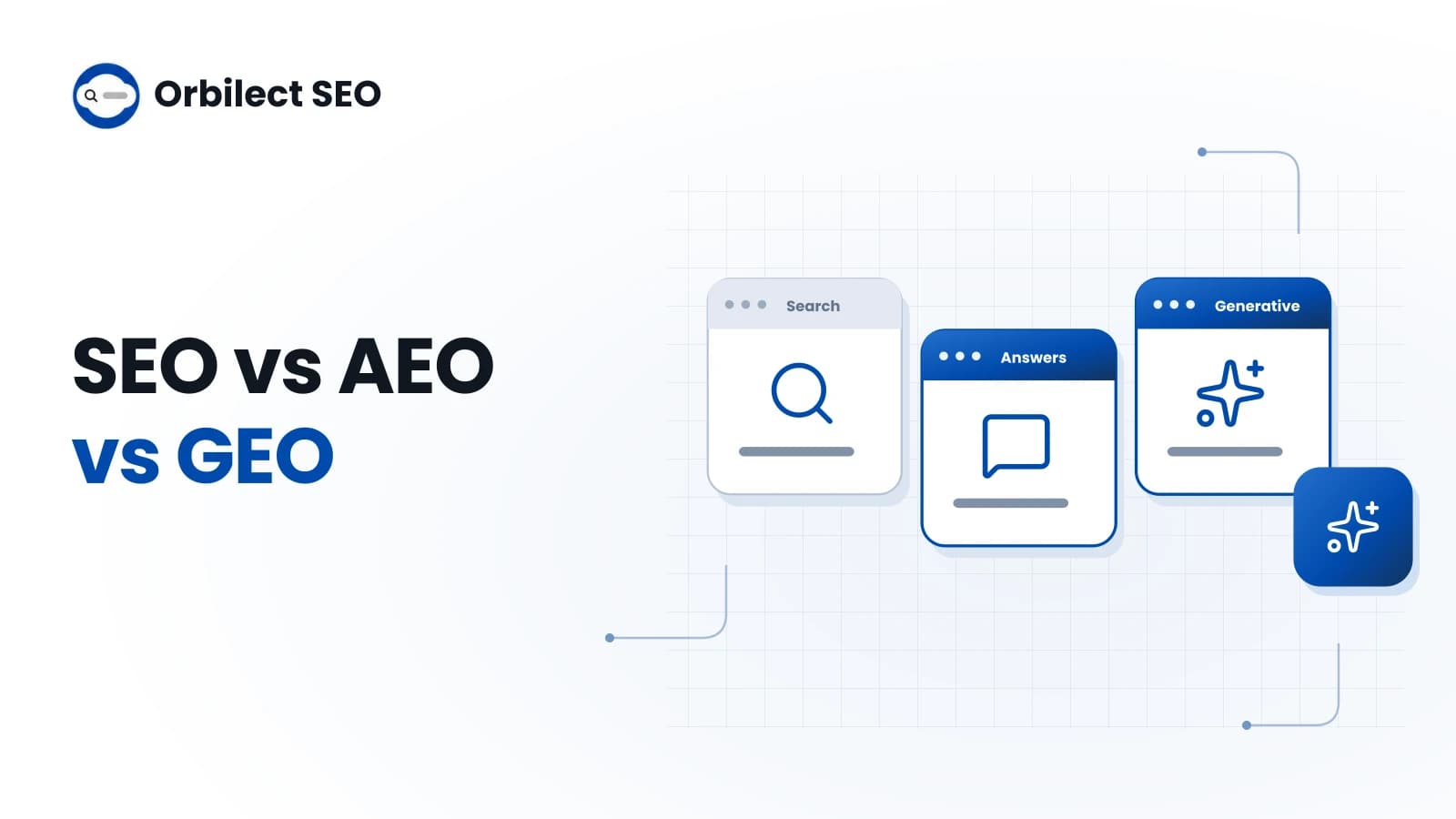
What each term describes
SEO focuses on discovery and visibility in unpaid search. AEO is a shorthand for making answers easy to identify and use. GEO is a shorthand for improving the chance that a generative experience can find, interpret or cite useful material. The labels overlap, and platforms can implement these experiences differently.
Map each approach to a specific discovery moment
Traditional SEO helps your pages become eligible for relevant unpaid results. Answer engine optimization, or AEO, describes making an answer easy to extract and use. Generative engine optimization, or GEO, describes creating useful, attributable material that may be surfaced by generative systems. These are industry terms with overlapping practices. Give a page a real purpose before deciding which label describes the work.
- FindCreate a discoverable page for a real need
- AnswerPut a clear response beside its supporting detail
- ReferencePublish original evidence with transparent sourcing
What to do on the page
Publish a clear answer backed by evidence. Put the method, author, limits and date close to claims that depend on them. Keep material in accessible HTML and make related pages easy to find. Google says its AI search features build on its general SEO practices.
Write an answer that survives being read in isolation
Answer the question near its heading. Then explain the conditions, source, examples and exceptions. On a supplier page, a delivery promise is useful only if it states the geography, cutoff and exclusions. A comparison guide can add original criteria and a dated methodology. Google’s guidance for its AI search features keeps the same core SEO fundamentals and does not require special AI markup.
Measure outcomes across formats
Track qualified organic visits and conversions as usual. Where referrals are identifiable, compare them separately. Sample the questions customers actually ask and track whether your pages are referenced. Treat mentions, clicks and revenue as distinct measures.
Measure each surface using evidence you can reproduce
Keep a small set of queries for each major task, such as comparison, definition or purchase. Record the date and context when manually checking AI references because answers vary. Follow visits and enquiries from known referrers where analytics can distinguish them. Use Search Console for Google Search performance, but avoid claiming you can isolate every visit from AI features in its existing reports.
One topic across three formats
A commercial solar installer creates a service page for business buyers, a direct explanation of the site assessment and a guide comparing financing options. The service page serves demand, the direct explanation helps users with a specific question, and the financing guide offers factual context worth referencing. Links connect related material where a reader will need it.
A useful editorial brief can track all three tasks without creating three versions of the same article. Keep one preferred URL, assign an owner to confirm facts, and define which claims need their own source or example. When revising a page, compare the opening answer and supporting detail together. A clear definition helps readers enter the page. Original examples and transparent limitations give them a reason to keep reading or share the page with somebody making the same decision.
| Task | Useful format | Validation |
|---|---|---|
| Find a supplier | Service page with territory and criteria | Relevant clicks and enquiries |
| Get one answer | Direct explanation with conditions | Can readers resolve the question quickly? |
| Compare options | Sourced comparison with criteria | Sources, referrals and useful next steps |
Common questions
Do I need a separate website version for AI search?
Google says ordinary SEO requirements apply to its AI features. Start with crawlable, helpful pages and keep material claims easy to verify.
Should I publish an FAQ for every keyword?
Group genuinely related customer questions on the page that serves their needs. Add a separate guide if the question requires enough explanation to stand on its own.
Are these separate services on every project?
They can be delivered in the same content and technical programme. Decide which discovery problems you need to solve before buying an additional workstream for the same pages.
What to check next
- Traditional searchInspect landing-page queries and conversions
- Direct answersMake the answer clear and cite the evidence
- Generative discoverySample citations and track verifiable referrals